Why Your Restaurant Ordering Counter Should Only Show the Menu — Nothing Else
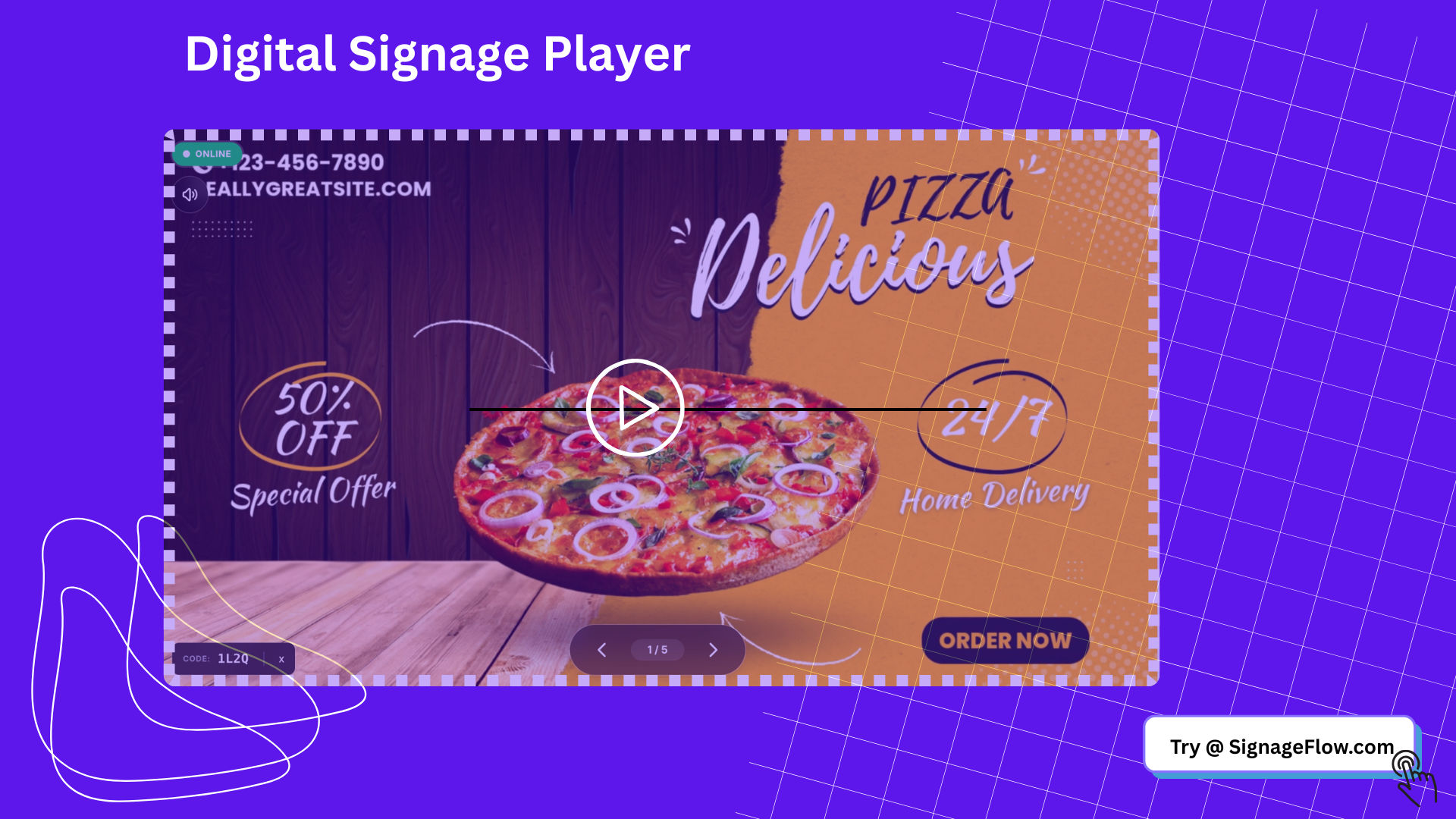
Picture this: you walk up to a restaurant counter, hungry and ready to order. You glance up at the screen to check the prices, and a promotional video for a limited-time milkshake starts playing. You wait. It loops. The menu comes back for five seconds, then disappears behind another ad. You've lost your train of thought. The person behind you is sighing. You feel rushed and mildly annoyed, and you haven't even ordered yet.
This scenario plays out in restaurants everywhere, every day. And it's entirely avoidable.
The Ordering Counter Is the Wrong Place for Ads
At the moment a customer stands at your counter, they have one job: decide what to order. Any content that pulls their attention away from that task creates friction, and friction costs you sales, speed, and satisfaction.
Digital signage is powerful precisely because different screens serve different purposes. A screen in your waiting area or dining room is perfect for brand storytelling, seasonal promotions, and feel-good video content. A customer sitting at a table has time. They're relaxed. They're open to being engaged.
But a customer standing at the ordering counter is in an entirely different mental state. They're under mild time pressure. There may be people behind them in the queue. They're actively scanning prices, reading descriptions, and mentally making trade-offs. This is not the moment to interrupt them with a 15-second promotional video.
The Science Behind the Frustration
When a customer is reading and processing menu information, their working memory is occupied. Introducing a moving visual like a promotional clip forces the brain to split its attention. The menu temporarily disappears, the video plays, and the customer has to restart their mental process when the menu returns.
This isn't just an annoyance. It creates measurable consequences: slower decision-making, longer time at the counter, increased perceived wait times, and a subtle but real dip in overall satisfaction. The customer may not be able to articulate why the experience felt off, but they'll feel it.
Why Restaurants Still Mix Menus with Promos (And Why It Backfires)
The intention is usually good. Restaurants mix menus and promotional content at the counter thinking it creates upselling opportunities. If the customer sees the dessert promo, maybe they'll add it to their order. The logic makes sense on paper. The execution, however, breaks the experience.
Here's why it backfires:
The timing is unpredictable. Customers arrive mid-loop. They might only see the promotional video and miss the full menu entirely, leaving them underprepared when they reach the staff member.
It signals disrespect for the customer's time. When the menu goes away, it feels like the screen is not designed with the customer in mind. That subtle feeling of being inconvenienced adds up, especially for repeat visitors.
It slows down your service. Underprepared customers at the counter slow your entire queue. Staff spend more time per transaction, which drives up wait times for everyone behind them.
It actually reduces upsell effectiveness. Rushed or mildly frustrated customers are less likely to consider add-ons. A smooth, frictionless ordering experience converts better than an interrupted one. The upsell opportunity is lost not because the customer didn't see the promo, but because the experience put them on edge.
The Right Content for the Right Screen
The solution isn't to eliminate promotional content. It's to put it in the right place.
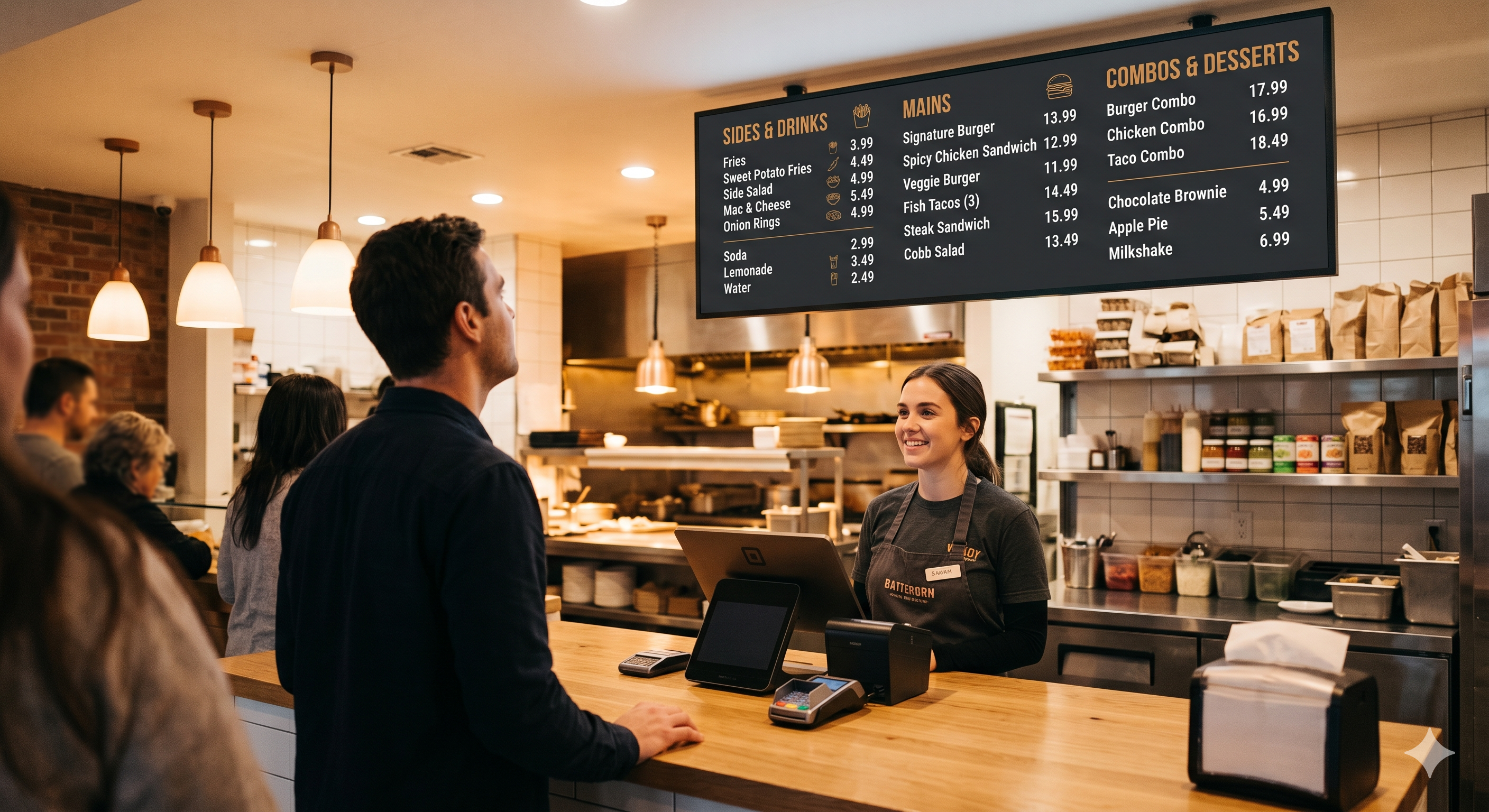
Your ordering counter screens should show the full menu, always visible, with clear item photos and pricing, allergen or dietary information, today's specials listed as menu items, and simple static prompts like "Add a side for AED 5."
You can still highlight specials and encourage upsells, just as persistent, readable menu content rather than interruptive video. A well-designed menu board can do all the selling you need without hijacking the customer's focus.
Where Promotional Content Actually Works
Move your video and promotional content to screens where customers have the time and headspace to engage with it.
Queue entry screens. Customers joining the line have one to three minutes to absorb promotional content before they need to make a decision. This is a prime upsell moment.
Dining area screens. Seated customers are relaxed and receptive to brand content, seasonal offers, and loyalty programme messaging.
Waiting area displays. Ideal for longer-form content, brand videos, and community messaging.
Window or exterior signage. Attract passing customers with bold visuals before they even walk in.
How to Set This Up with Signageflow
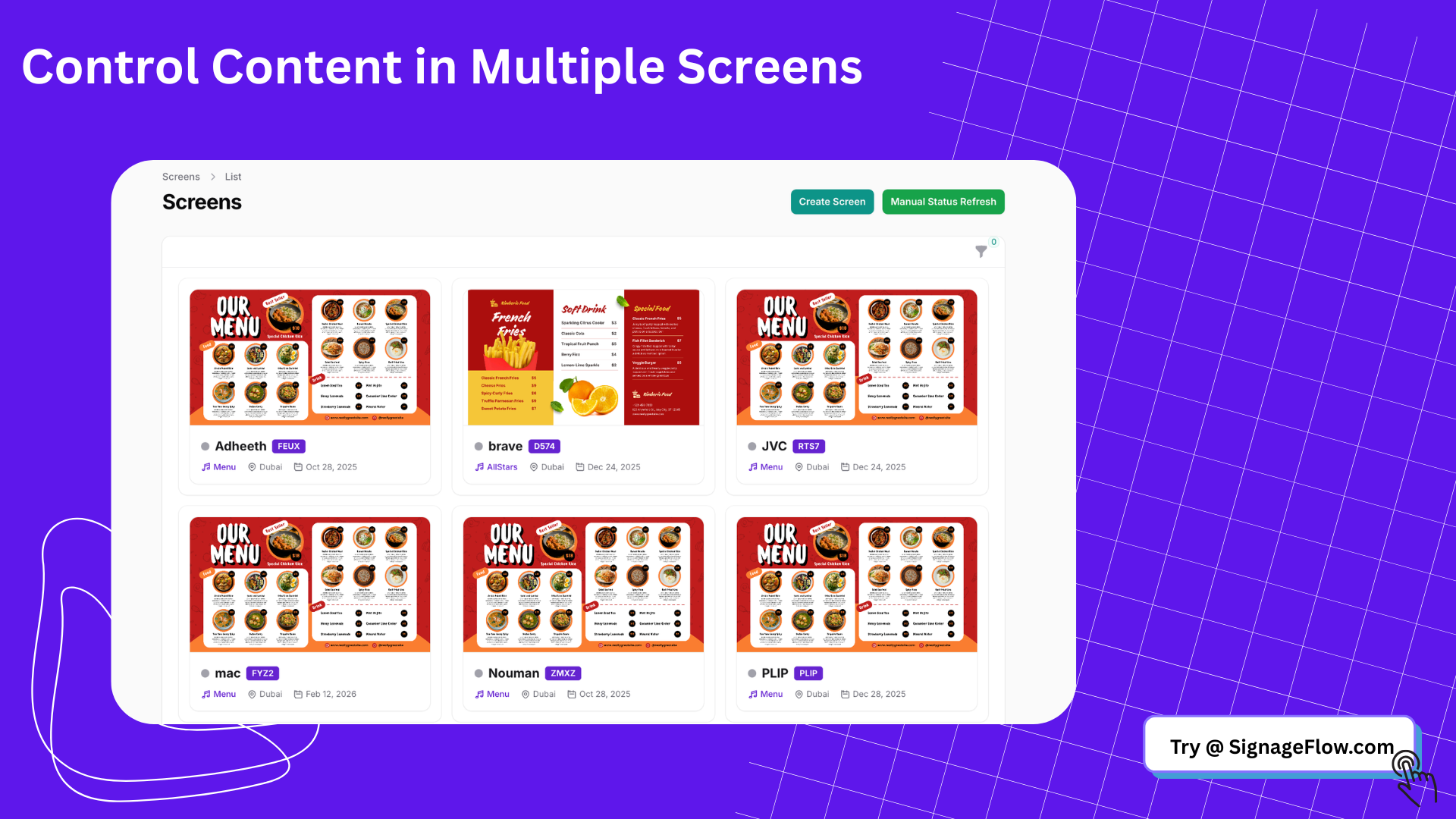
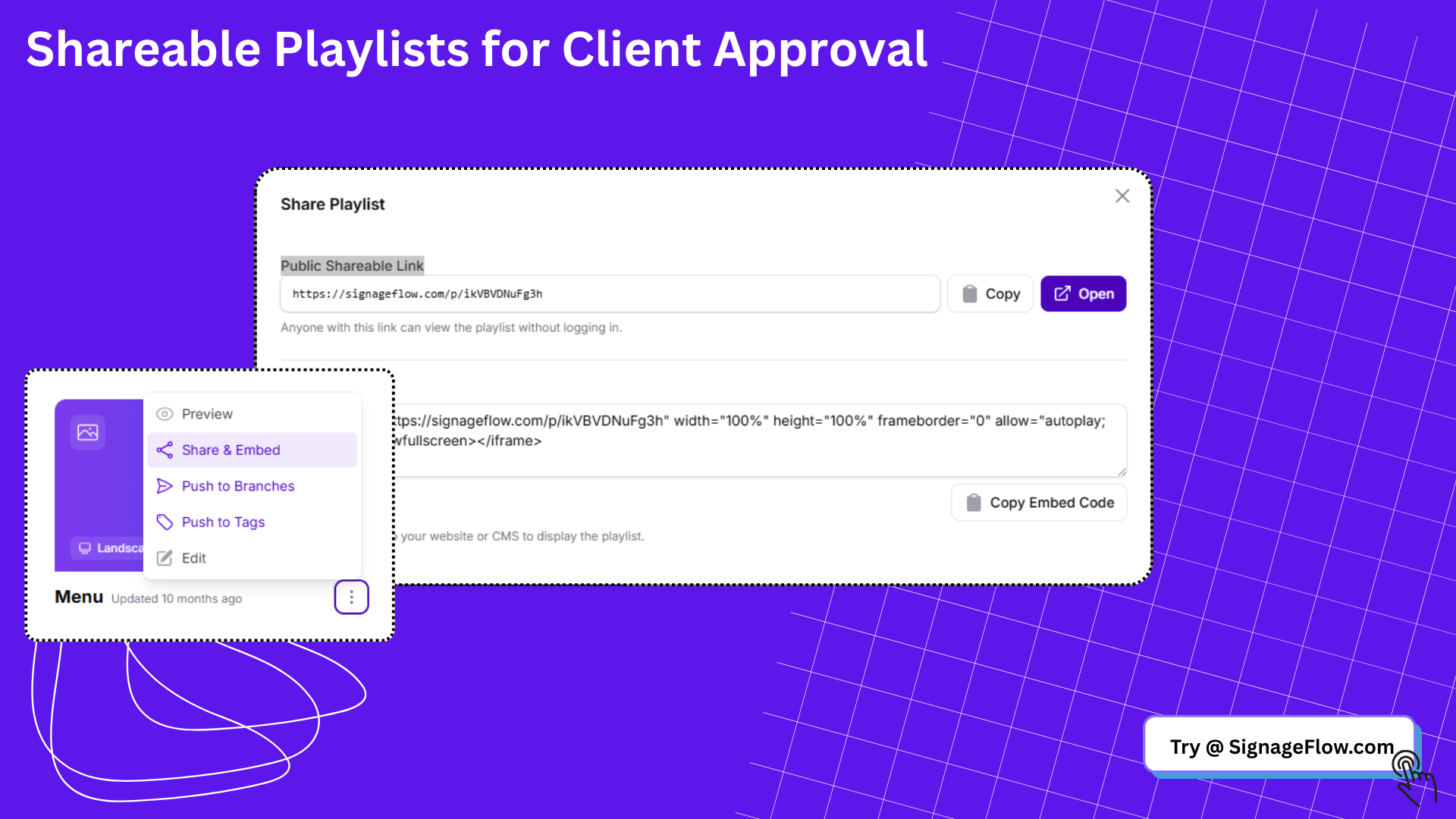
Signageflow's group-based scheduling makes it straightforward to assign the right content to the right screen. You can define your counter-facing displays as menu-only zones(groups) and configure all other screens independently, with no technical complexity and no compromises.
You can also set time-based rules: serve a clean, high-readability menu layout during peak lunch and dinner hours, and allow richer content during quieter periods when the queue is short and customers aren't under pressure.
Small adjustments like this have a real impact on customer experience, order accuracy, and queue throughput. The best-run restaurant groups in the world are deliberate about exactly this kind of detail, and with Signageflow, independent operators have access to the same tools.
Ready to rethink your screen strategy?
Signageflow gives you full control over every screen in your restaurant, what plays, when, and where. Start your free trial at signageflow.com and see the difference intentional signage makes.